


Who may participate?
Typically any Private School who has been in existence for a minimum of two (2) years that has audited financial reports.
What project types are eligible for financing?
Tax-exempt financing is available to purchase facilities, renovate facilities, acquire major equipment, and/or refinance existing loans which may be outstanding at higher (or variable) interest rates.
Can working capital be covered in the Program?
Yes, working capital may be borrowed only in conjunction with the financing of real property.
Is separate construction financing necessary?
No, MCM’s School Bond Program provides permanent financing covering both the construction period and the long-term debt servicing, so there is no need for two loans.
Is the rate fixed and what will be the final rate? Yes, MCM provides fixed rates for the life of the loan, not a floating or variable rate. The actual interest rate will be dependent on the credit dynamics of the specific School and market conditions at the time securities are sold. It is difficult to predict exact interest rates until these variables are known, except to say that tax-exempt rates are typically 20 to 30% less than traditional bank financing. Prior to the sale, MCM’s team of professionals will monitor comparable bond sales, be in communications with potential purchasers, and provide feedback to the client in advance of the offering to make sure proper expectations are maintained and met.
At what point is the interest rate confirmed?
The final rate on the securities is finalized once the securities are sold to willing buyers, at which point the School can agree to its acceptance the financial terms provided; thereafter rates are set and the transaction can proceed to final documentation and closing.
What percent of project costs can be financed through the Program?
Generally, 100% of project costs can be financed. Additionally MCM can often finance the costs of issuance and/or deferred interest costs in the early years, when appropriate.
Is there a minimum size loan that is necessary for participation in this Program?
The minimum loan is $3,000,000. Anything less will cause the savings realized through using tax-exempt securities to be sacrificed.
Is there a maximum loan that a School may receive?
There is no limit to the size of the loan that School may obtain, other than the practical limit of the School’s ability to repay its obligations.
For how long can money be borrowed?
Loans can be any length from 5 years to 35 years. Our Program structures the customize the term of the financing to fit the long term cash flow needs of the School.
Will there be any up-front costs associated with this financing Program?
No, all costs and fees associated with the transaction are paid from the financing proceeds. Certain costs incurred by the school in preparation of the project can also be reimbursed from proceeds at closing.
What are the anticipated costs of issuance?
Costs of issuance are a function of the total financing amount, but generally estimated to be between 2.75% and 3.75% of the loan amount (including legal allowances and other transaction structuring costs). These costs are typically deferred until the completion of a successful financing, and spread out over the life of the financing.
When will money be available to the School?
Our Program will take between two to four months to assemble and market. At closing funds will be deposited into a dedicated account and available for the School to advance the Project.
How does the School make payments on its loan through the Program?
Generally, the School will make monthly payments to the Trustee bank; however, in certain cases scheduling semi-annual payments may be appropriate to meet the Schools cash flow timing needs.
What security is required by the financing?
The financing will be secured through a first mortgage on the facility being financed, together with first (though not exclusive) lien on revenues of the School. Borrowing additional funds in the future is allowable, provided the School can meet a reasonable debt service coverage test.
Who handles the construction bids and selection of builders?
The School is responsible for selection of contractors, engineers and architects, just as if one was paying cash for the project.
Is a property appraisal needed, and if so, when?
Most typically, an appraisal is not required at the time you make application for participation in the Program. Notwithstanding having a recent appraisal may help the School in negotiating for real estate or determining its project funding requirements
What if a project falls through completely after financial closing?
The School must be fairly certain that its project will go through as set forth in its plan of finance. In the event the Project were canceled post-closing, the School would typically be able to prepay the financing, but the cost of issuance would be expended as a sunk cost.
What are the advantages to MCM’s School Bond Program?
1. The underlying transaction loan is typically tax-exempt, so the interest rates will be about 20% to 30% lower than conventional bank financing.
2. MCM offers fixed rates with annual payments scheduled for the entire loan term.
3. MCM offers 100% financing, allowing the School to preserve cash for other needs, and
4. MCM’s clients can secure property ownership and thereby build financial equity on their balance sheets (normally difficult in this relatively low profit margin sector).
Who buys these securities, and why would they buy them at these low interest rates?
Investors are willing to buy these securities at low interest rates because of the tax-exempt status. , which allows the investors to not have to pay income tax on the interest earnings. With over 25 years of school financing experience, MCM’s School Bond Program is well received by the investment community, providing our clients with access to capital.
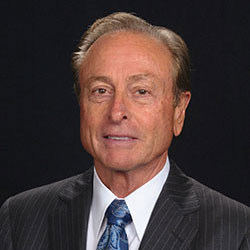
Michael Harling
Dallas Office
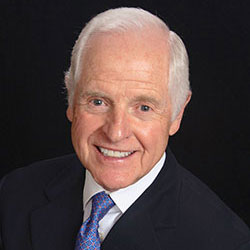
Jim Anderson
Denver Office

Robert DeMonbrun
Denver Office

Michael O. Hark
Denver Office

Christopher Perlitz
Denver Office

Barbara Winkler
Denver Office
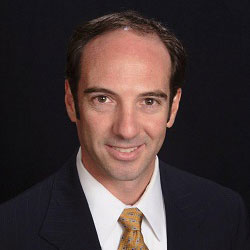
Daniel Askenazi
Denver Office

Tim Zarlengo
Denver Office

Tim David
Denver Office